
Discover proven strategies eCommerce retailers can use to protect profits,increase AOV,reduce costs,and stay competitive in tough markets.
How eCommerce Retailers Can Combat Falling Consumer Spending
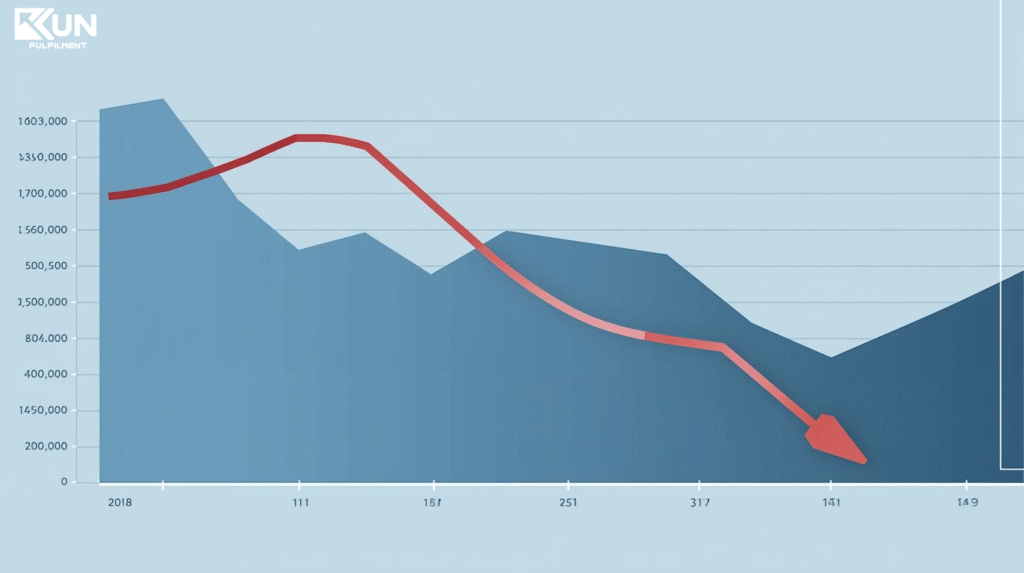
Consumer spending is tightening.
Across the UK and globally,shoppers are becoming more cautious. Rising living costs,inflation pressures and economic uncertainty have changed buying behaviour. Customers are spending less,comparing more and delaying purchases.
For eCommerce retailers,this can mean:
- Slower sales
- Lower conversion rates
- Reduced Average Order Value (AOV)
- Increased competition
- But falling consumer spending doesn’t mean falling profits — if you adapt strategically.
In this guide,we’ll break down:
- Why consumer spending is falling
- How buying behaviour has changed
- 10 proven strategies eCommerce retailers can use to protect and grow revenue
- The role fulfilment plays in staying profitable during downturns
Why Is Consumer Spending Falling?
Economic pressure affects consumer confidence.
When costs increase for:
- Energy
- Rent & mortgages
- Groceries
- Fuel
Discretionary spending decreases.
Shoppers prioritise:
- Essentials
- Discounts
- Value-for-money brands
They also:
- Compare prices more often
- Abandon carts more quickly
- Delay non-urgent purchases
- For online retailers,this means competition becomes more intense.
How Consumer Behaviour Has Changed in eCommerce
Today’s shopper is:
- More price-sensitiv
- More research-driven
- More cautious with checkout
- More influenced by trust & reviews
Retailers must adapt to:
- Provide better value
- Improve trust signals
- Optimise fulfilment
- Control costs
- What is AOV (and strategies to increase it)?
10 Smart Strategies to Combat Falling Consumer Spending
1. Focus on Increasing Average Order Value (AOV)
When traffic slows,maximise revenue per customer.
Strategies include:
- Free shipping thresholds
- Bundles
- Upselling
- Volume discounts
- Increasing AOV can offset reduced order volume.
2. Introduce Flexible Pricing Strategies
Offer:
- Buy Now, Pay Later options
- Tiered pricing
- Entry-level product versions
- Smaller pack sizes
- Flexibility helps customers purchase even during tighter budgets.
3. Strengthen Your Value Proposition
Consumers need clear reasons to choose you.
Highlight:
- Quality
- Durability
- Long-term savings
- Guarantees
- Eco-friendly benefits
- Shift messaging from “cheap” to “value.”
4. Optimise Your Shipping Strategy
High shipping costs kill conversions — especially during economic downturns.
Solutions:
- Negotiate better courier rates
- Offer free shipping thresholds
- Improve packaging efficiency
- Reduce dimensional weight
Working with a professional 3PL like Kun Fulfilment can reduce shipping costs through volume courier partnerships.
5. Reduce Operational Costs Through Smart Fulfilment
Lower spending means you must protect margins.
Optimise:
- Warehouse storage
- Pick & pack efficiency
- Packaging materials
- Return handling
Professional fulfilment partners help reduce overhead costs compared to in-house warehousing.
6. Improve Customer Retention (Cheaper Than Acquisition)
Acquiring new customers is expensive.
Retaining existing customers:
- Costs less
- Increases lifetime value
- Improves AOV
Implement:
- Loyalty programs
- Email marketing
- Post-purchase offers
- Re-engagement campaigns
- Focus on repeat buyers.
7. Build Trust & Social Proof
During uncertain times, trust becomes critical.
Improve:
- Product reviews
- Testimonials
- Trust badges
- Clear return policies
- Transparent shipping timelines
- Customers buy from brands they trust.
8. Optimise Conversion Rate (CRO)
When traffic drops, conversion rate optimisation becomes essential.
Focus on:
- Faster website speed
- Clear CTAs
- Mobile optimisation
- Simple checkout process
- Clear refund policy
- Small improvements in conversion can offset reduced spending.
9. Expand Into High-Demand Niches
While some sectors decline, others remain strong.
Resilient niches include:
- Essentials
- Health & wellness
- Beauty
- Supplements
- Pet products
- Home organisation
- Diversifying product lines can stabilise revenue.
10. Strengthen Inventory & Cash Flow Management
Poor inventory management during downturns can destroy profits.
Avoid:
- Overstocking slow items
- Running out of fast movers
- Excess storage costs
Smart stock forecasting and reorder level tracking are crucial.
The Role of Fulfilment During Economic Downturns
Fulfilment efficiency directly impacts profitability.
A strong fulfilment strategy can:
- Reduce per-order costs
- Lower return rates
- Improve delivery speed
- Enhance customer satisfaction
- Protect margins
When consumer spending falls, operational efficiency becomes your competitive advantage.
Kun Fulfilment helps businesses:
- Lower logistics overhead
- Improve picking accuracy
- Optimise packaging
- Scale flexibly without fixed warehouse costs
7. Build Trust & Social Proof
During uncertain times, trust becomes critical.
Improve:
- Product reviews
- Testimonials
- Trust badges
- Clear return policies
- Transparent shipping timelines
Customers buy from brands they trust.
8. Optimise Conversion Rate (CRO)
When traffic drops, conversion rate optimisation becomes essential.
Focus on:
- Faster website speed
- Clear CTAs
- Mobile optimisation
- Simple checkout process
- Clear refund policy
Small improvements in conversion can offset reduced spending.
9. Expand Into High-Demand Niches
While some sectors decline, others remain strong.
Resilient niches include:
- Essentials
- Health & wellness
- Beauty
- Supplements
- Pet products
- Home organisation
Diversifying product lines can stabilise revenue.
10. Strengthen Inventory & Cash Flow Management
Poor inventory management during downturns can destroy profits.
Avoid:
- Overstocking slow items
- Running out of fast movers
- Excess storage costs
Smart stock forecasting and reorder level tracking are crucial.
The Role of Fulfilment During Economic Downturns
Fulfilment efficiency directly impacts profitability.
A strong fulfilment strategy can:
- Reduce per-order costs
- Lower return rates
- Improve delivery speed
- Enhance customer satisfaction
- Protect margins
When consumer spending falls, operational efficiency becomes your competitive advantage.
Kun Fulfilment helps businesses:
- Lower logistics overhead
- Improve picking accuracy
- Optimise packaging
- Scale flexibly without fixed warehouse costs

Common Mistakes Retailers Make During Spending Declines
Avoid:
- Cutting marketing completely
- Lowering prices too aggressively
- Ignoring customer experience
- Over-discounting
- Ignoring fulfilment costs
- Short-term panic decisions can cause long-term damage.
Long-Term Growth Strategy During Economic Slowdowns
Successful retailers:
- Double down on retention
- Optimise operations
- Strengthen brand trust
- Improve margins
- Invest in automation
- Downturns eliminate weak businesses — but strengthen strategic ones.
TL;DR – How to Combat Falling Consumer Spending
To protect your eCommerce revenue:
- Increase AOV
- Optimise shipping costs
- Improve retention
- Strengthen value messaging
- Reduce fulfilment expenses
- Improve conversion rate
- Manage stock wisely
Conclusion: Adapt,Optimise,Grow
Falling consumer spending doesn’t mean failure.
It means:
- Smarter pricing
- Better value
- Leaner operations
- Stronger customer relationships
Retailers who optimise fulfilment, improve margins, and focus on customer retention will survive — and often grow — during economic downturns.
Ready to optimise your fulfilment and protect your margins?Explore Kun Fulfilment’s scalable eCommerce solutions today.
