
Learn how to calculate your reorder period accurately. Avoid stockouts,improve cash flow and scale your UK eCommerce business efficiently.
How to Calculate Your Reorder Period: A Complete Guide for eCommerce Businesses
Introduction:Are You Reordering Too Late — or Too Early?
Running out of stock is one of the fastest ways to lose revenue in eCommerce.But overstocking ties up cash, increases storage costs and hurts your margins.
So how do you find the balance?
The answer lies in calculating your reorder period accurately. If you get this right, you protect cash flow,maintain availability and scale confidently.In this in-depth guide,we’ll break down exactly how to calculate your reorder period,why it matters and how professional fulfilment support can transform your inventory management strategy.
What Is a Reorder Period?
Your reorder period is the time interval between placing one order with your supplier and placing the next.
It answers one simple but critical question:
How often should you reorder stock to avoid running out?
This is different from reorder level, which determines when to place an order. If you’re unsure about reorder level calculations, read our guide on how to calculate reorder level for a full breakdown. The reorder period focuses on frequency,not just stock thresholds.
Why Reorder Period Matters in eCommerce
For online retailers,inventory mistakes are expensive.
If your reorder period is too long:
- You risk stockouts
- You lose Buy Box positions
- You damage customer trust
- You increase rush shipping costs
If your reorder period is too short:
- You overstock
- You increase warehousing fees
- Cash flow tightens
- Dead stock risk rises
A well-calculated reorder period improves:
- Inventory turnover
- Forecast accuracy
- Warehouse efficiency
- Scalability
This becomes even more important when working with a 3PL. If you’re new to outsourced logistics,our 3PL Warehouse Guide explains how third-party fulfilment works in detail.

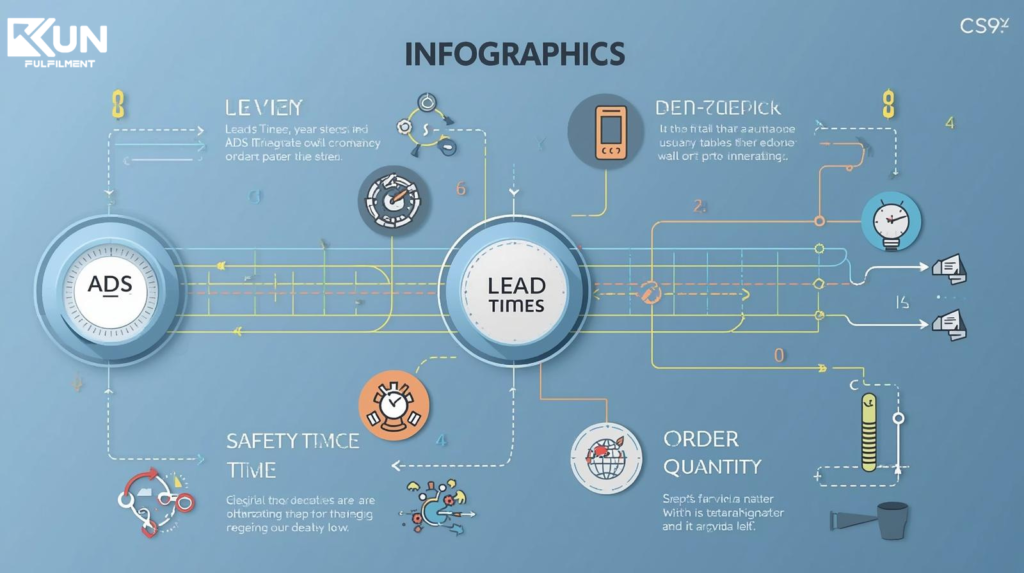
Step 1:Understand the Key Variables
Before calculating your reorder period, you need accurate data.
Here are the core components:
1. Average Daily Sales (ADS)
How many units you sell per day on average.
Formula:
Total units sold ÷ Number of days
Example:
If you sold 900 units in 30 days:
900 ÷ 30 = 30 units per day
2. Lead Time
The time between placing an order with your supplier and receiving the goods.
This includes:
- Manufacturing time
- Shipping time
- Customs clearance
- Receiving and processing time
In the UK, lead times vary:
- UK supplier: 3–10 days
- EU supplier: 7–14 days
- Asia supplier: 30–60+ days
3. Safety Stock
Buffer stock to protect against:
- Delays
- Demand spikes
- Supplier issues
4. Order Quantity
The number of units you order each time.
Often calculated using Economic Order Quantity (EOQ), but many eCommerce brands use practical forecasting instead.
Step 2: The Reorder Period Formula
The simplified formula:
Reorder Period = Order Quantity ÷ Average Daily Sales
This gives you the number of days your stock lasts per order.
Example Calculation
- Order Quantity: 1,200 units
- Average Daily Sales: 30 units
- 1,200 ÷ 30 = 40 days
- Your reorder period is 40 days.
This means you need to place a new order every 40 days to maintain supply (adjusted for lead time).
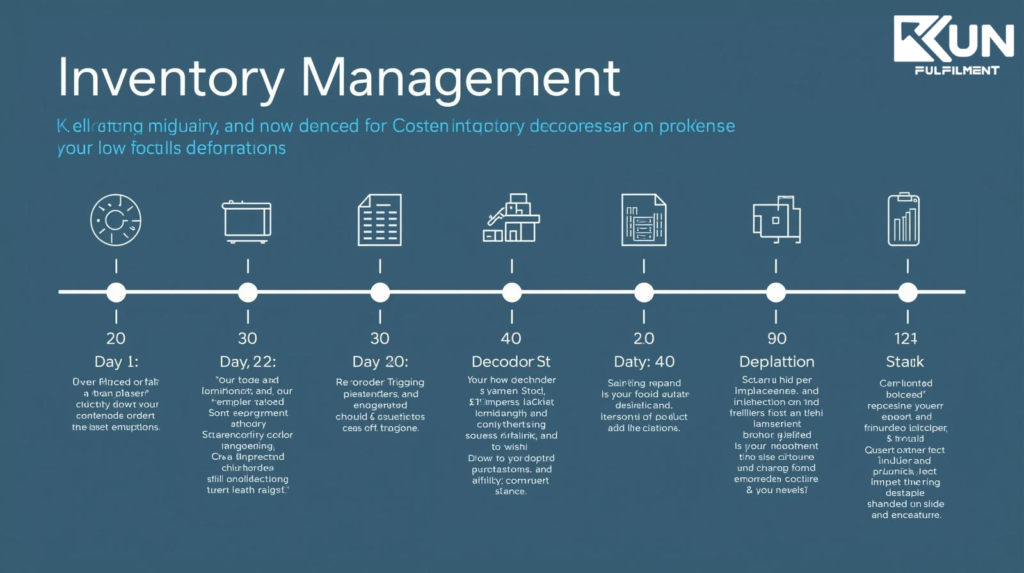
Step 3: Factor in Lead Time Properly
Here’s where many businesses go wrong.
You don’t wait 40 days and then reorder.
You must reorder early enough to cover your lead time.
Example:
- Reorder period: 40 days
- Supplier lead time: 20 days
You must place your next order on Day 20, not Day 40.
Otherwise, you’ll run out.
This is where reorder period and reorder level work together. Our guide on how to calculate reorder level explains this connection in detail.
Step 4: Adjust for Seasonality
UK eCommerce demand fluctuates heavily:
- Q4 peak (Black Friday, Christmas)
- January sales
- Summer seasonal dips
- Industry-specific peaks
If you sell fashion, electronics, supplements or gifting products, demand spikes can distort averages.
Strategy:
- Calculate ADS for peak season separately
- Create a peak-season reorder period
- Increase safety stock temporarily
Brands that ignore seasonality frequently stock out in Q4 — the most profitable quarter.
If you’re looking to strengthen overall growth strategy,see our guide on Five Ways to Boost Your eCommerce Business.
Step 5: Consider SKU-Level Accuracy
- Not all products behave the same.
- High-volume SKUs need tighter reorder periods.
- Slow-moving SKUs need wider intervals.
- If you’re unsure what qualifies as a SKU,read our explanation of what is a SKU and why SKU-level tracking matters.
- Professional fulfilment partners track data at SKU level to optimise reorder planning.

Step 6: The Role of AOV in Reorder Planning
Average Order Value (AOV) impacts demand predictability.
If your AOV increases due to bundling or upselling, product movement changes.
Learn more in our detailed explanation of what is AOV and how it influences revenue forecasting.
Higher AOV often means:
- More multi-item orders
- Faster stock depletion
- Increased packaging needs
- Your reorder period must adapt accordingly.
Step 7: How Fulfilment Impacts Reorder Efficiency
Many brands underestimate fulfilment’s role in reorder planning.
A professional e-commerce fulfilment provider:
- Tracks real-time inventory
- Provides stock reporting
- Forecasts usage trends
- Reduces receiving delays
- Optimises storage costs
Our comprehensive E-Commerce Fulfilment Guide explains how outsourced fulfilment supports scaling brands.
With a strong 3PL partner:
- Inventory accuracy improves
- Data is centralised
- Reorder decisions are proactive, not reactive

Practical Strategies to Optimise Your Reorder Period
1. Use Rolling 30-Day Averages
Avoid static calculations.
Update your ADS monthly.
2. Separate Fast & Slow Movers
Create ABC inventory categories:
- A: High volume
- B: Medium
- C: Low volume
Shorter reorder period for A-items.
3. Align with Your Shipping Policy
If you promise 24-hour dispatch, stockouts are unacceptable.
Read our guide on what is a shipping policy to ensure operational alignment.
4. Improve Supplier Communication
Negotiate:
- Shorter lead times
- Smaller MOQs
- Flexible scheduling
5. Use Inventory Management Software
Manual spreadsheets fail at scale.
Integrate:
- Sales channels
- Warehouse management system
- Supplier tracking

Common Mistakes eCommerce Brands Make
- Ignoring lead time variability
- Not updating sales averages
- Over-ordering during growth spikes
- Underestimating marketing campaign impact
- Failing to communicate with fulfilment partners
Correcting these mistakes immediately improves profitability.
Real UK-Based Example
A mid-sized UK supplement brand:
- 50 SKUs
- 1,500 daily orders
- Asian supplier (45-day lead time)
Initial issue:
Stockouts every 2 months.
Problem:
Reorder period calculated without adjusting for peak demand.
Solution:
- Seasonal ADS tracking
- 20% safety stock increase
- Partnered with professional 3PL
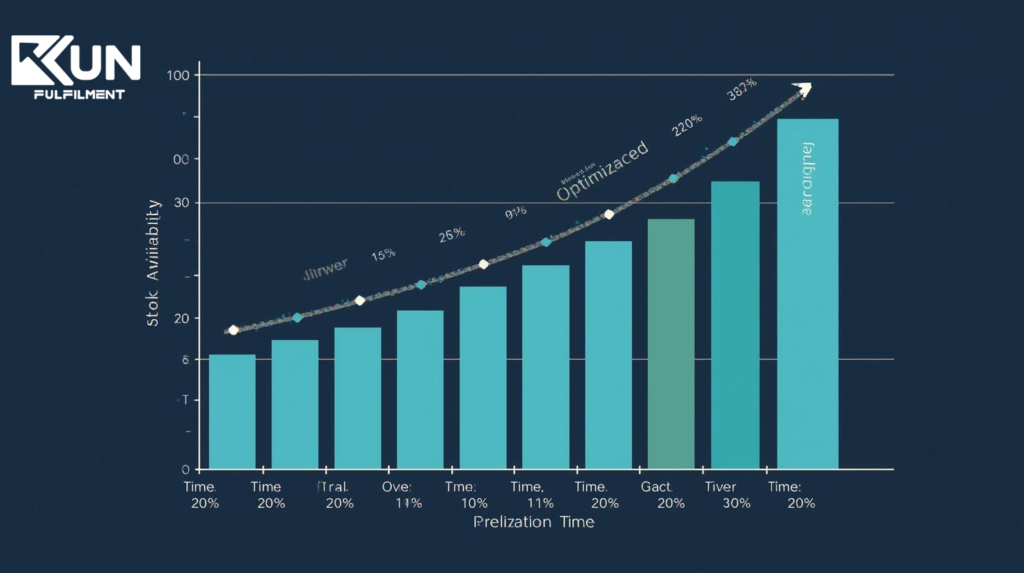
Result:
- 98.7% stock availability
- 15% reduction in emergency air freight costs
- Improved cash flow visibility
TL;DR – Key Takeaways
- Reorder period = Order Quantity ÷ Average Daily Sales
- Always factor in supplier lead time
- Adjust for seasonality
- Track data at SKU level
- Update calculations monthly
- Work with a professional 3PL to improve forecasting
- Align reorder period with your shipping commitments
Conclusion: Scale Smarter with the Right Inventory Strategy
Calculating your reorder period correctly is not optional — it’s fundamental to profitable growth.
Without it, you risk:
- Lost sales
- Damaged customer trust
- Increased logistics costs
- Cash flow strain
With it, you gain:
- Predictability
- Stability
- Scalability
As your order volume grows, inventory complexity increases. That’s where a reliable 3PL partner makes the difference.
Kun Fulfilment supports UK eCommerce brands with:
- Real-time inventory visibility
- Accurate SKU tracking
- Efficient warehousing
- Scalable fulfilment solutions
If you’re ready to optimise your inventory management and eliminate costly stockouts, explore Kun Fulfilment’s services today and build a smarter, scalable supply chain.