
Learn what a SKU (Stock Keeping Unit) is, how it works and why it’s essential for inventory management and fulfilment accuracy in eCommerce businesses.
What Is a SKU?
A SKU (Stock Keeping Unit) is a unique code used to identify and track a specific product in your inventory.
Each SKU represents:
- A single product
- A specific variation (size, colour, flavour, packaging, etc.)
- A unique inventory item in your system
Even if two products look similar, if they differ in any way, they must have different SKUs.
Simple example:
- Black T-shirt – Size M → SKU: TS-BLK-M
- Black T-shirt – Size L → SKU: TS-BLK-L
These are two different SKUs, even though they’re the same product style.
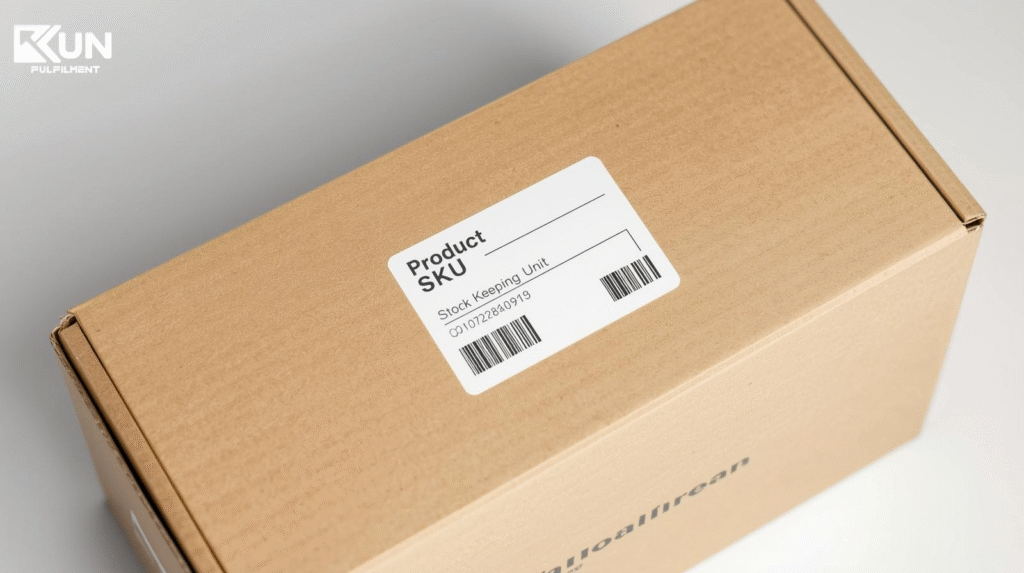
E-Commerce Fulfilment: A Comprehensive Guide
What Does SKU Stand For?
SKU stands for Stock Keeping Unit.
It’s an internal reference code used by:
- Sellers
- Warehouses
- Fulfilment centres
- Inventory management systems
Unlike barcodes or UPCs, SKUs are created by the business itself, meaning you control how they’re structured and used.
Why SKUs Are Important for eCommerce Businesses
SKUs are the foundation of efficient inventory and fulfilment operations.
Without proper SKUs, businesses face:
- Inventory confusion
- Incorrect order fulfilment
- Overselling or stockouts
- Higher return rates
Key benefits of using SKUs correctly:
- Accurate inventory tracking
- Faster picking and packing
- Fewer shipping errors
- Better reporting and forecasting
- Easier returns management
For fulfilment providers like Kun Fulfilment,SKUs ensure that the right product goes to the right customer every time.

SKU vs Barcode vs UPC: What’s the Difference?
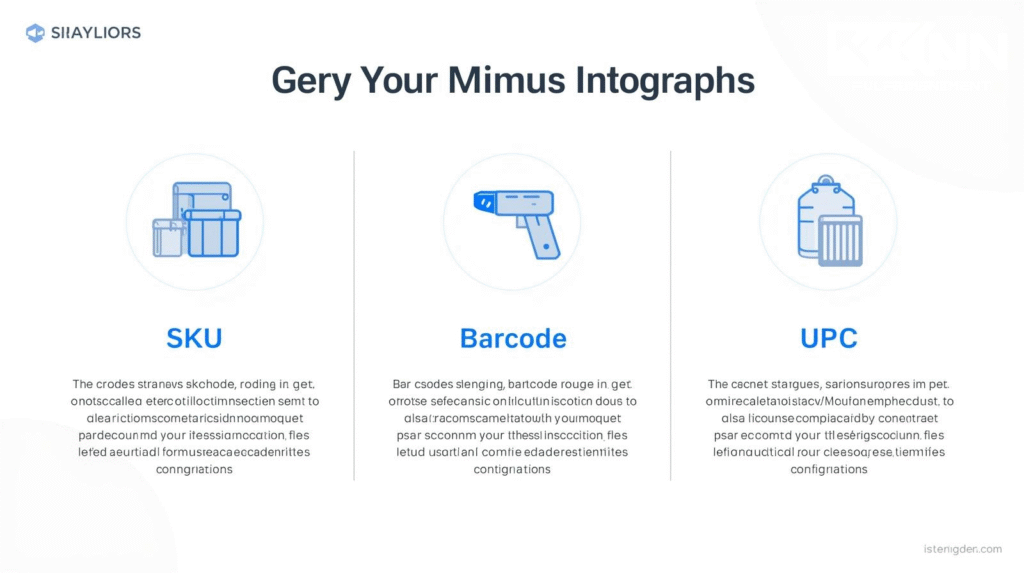
Many sellers confuse SKUs with barcodes or UPCs, but they are not the same.
| Term | What It Is | Who Creates It |
| SKU | Internal product identifier | Seller / Brand |
| Barcode | Scannable visual code | Often global |
| UPC / EAN | Universal product code | GS1 Organisation |
Key difference:
- SKUs are for internal use
- UPCs are universal and external
You can have:
- One UPC
- Multiple SKUs (for variations)
Third-Party Logistics (3PL) Software
How SKUs Work in Fulfilment & Warehousing
In a fulfilment warehouse, everything revolves around SKUs.
When an order is placed:
If SKUs are unclear, duplicated, or missing, it leads to:
- Wrong items shipped
- Delays in dispatch
- Increased returns and complaints
Professional fulfilment centres like Kun Fulfilment rely on clean SKU data to maintain 99.9% picking accuracy.

How to Create SKUs for Your Products (Best Practices)
There’s no universal format for SKUs, but clarity and consistency are critical.
A good SKU should be:
- Easy to read
- Short but descriptive
- Logical and structured
- Consistent across all systems
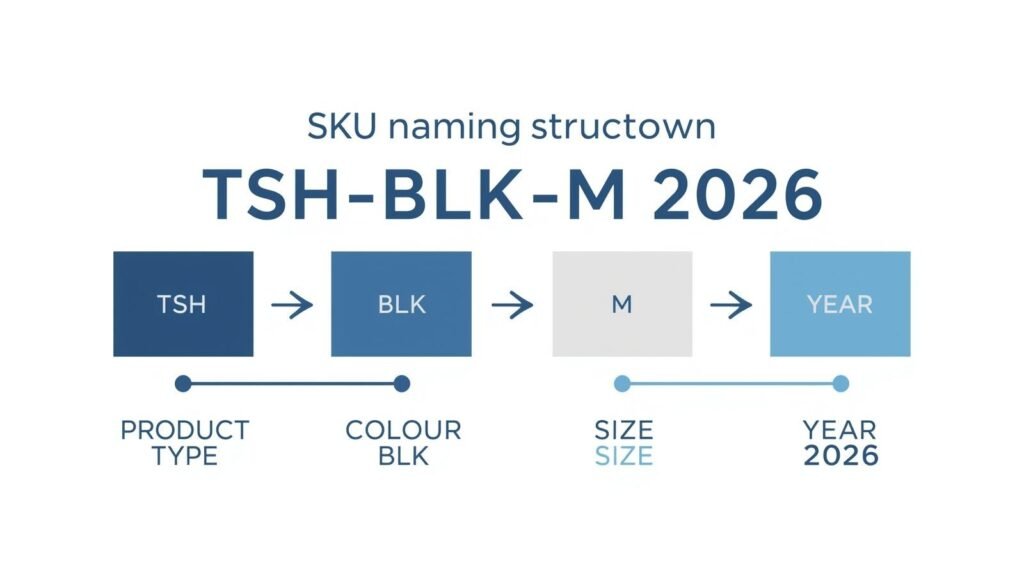
Example SKU structure:
CATEGORY – PRODUCT – VARIATION
Example:
- SKU: BT-LIP-RED-10ML
- BT = Beauty
- LIP = Lip Balm
- RED = Colour
- 10ML = Size
- BT = Beauty
Avoid:
- Random numbers
- Special characters
- Long, confusing codes
SKUs for Product Variations (Why One Product Needs Many SKUs)
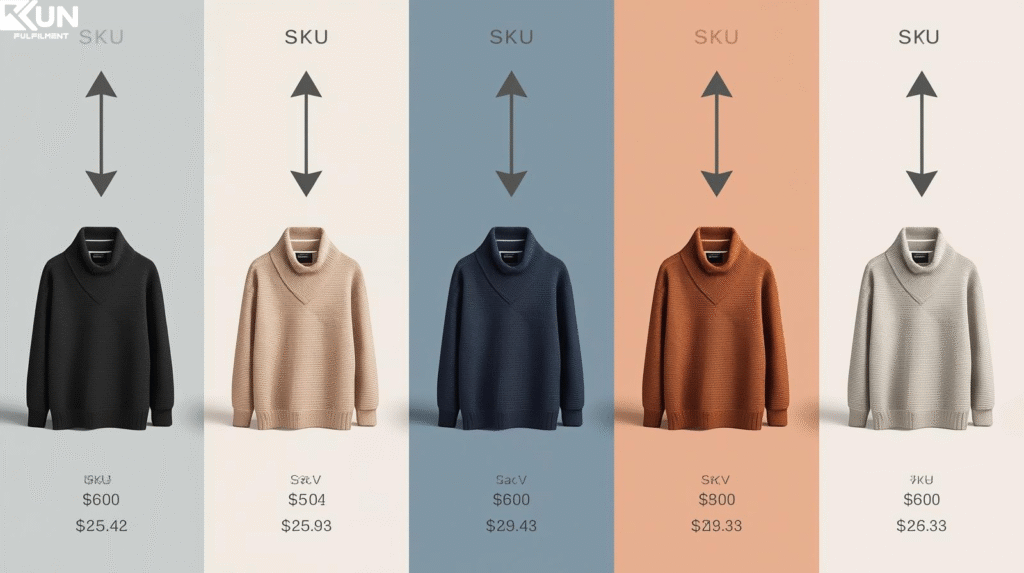
Each product variation requires a separate SKU.
This includes differences in:
- Size
- Colour
- Flavour
- Packaging
- Bundles
Example:
A shampoo sold in:
- 250ml bottle
- 500ml bottle
- These must be two different SKUs, even if the formula is identical.
This ensures:
- Correct stock levels
- Accurate fulfilment
- Proper sales reporting
Common SKU Mistakes eCommerce Businesses Make
Many inventory issues start with poor SKU management.
Common mistakes include:
- Reusing the same SKU for multiple products
- Changing SKUs after products are live
- Using supplier SKUs instead of internal ones
- Not syncing SKUs across platforms
These mistakes lead to:
- Inventory mismatches
- Overselling
- Fulfilment errors
- Poor customer experience
How SKUs Help with Inventory Forecasting & Scaling
SKUs are not just labels — they’re data points.
- With proper SKU tracking, you can:
- Identify best-selling products
- Spot slow-moving inventory
- Forecast demand accurately
- Plan reorders efficiently
This becomes essential when:
- Scaling to new marketplaces
- Running promotions
- Preparing for peak seasons
- Clean SKUs = clean data = smarter decisions.
SKUs in Multi-Channel Selling (Amazon, Shopify, TikTok)
When selling across multiple platforms, SKUs ensure:
- Inventory sync across channels
- Accurate stock levels
- Smooth fulfilment integration
Most fulfilment providers require:
- One master SKU per product
- Platform-specific references mapped to it
- This prevents overselling and stock conflicts.
How Kun Fulfilment Uses SKUs to Improve Accuracy
At Kun Fulfilment, SKUs are central to our fulfilment operations.
We use SKU-based systems to:
- Ensure precise picking and packing
- Reduce errors and returns
- Provide real-time inventory visibility
- Support multi-channel selling
- This allows brands to scale without worrying about inventory chaos.

TL;DR – What You Need to Know About SKUs
- SKU = Stock Keeping Unit
- Each product variation needs a unique SKU
- SKUs improve fulfilment accuracy
- Clean SKUs prevent inventory errors
- Essential for scaling eCommerce businesses
Conclusion: SKUs Are the Backbone of Scalable eCommerce
SKUs may seem like a small detail,but they play a huge role in how efficiently your business runs.From inventory management to fulfilment accuracy and data-driven growth,strong SKU systems create strong businesses.
Explore Kun Fulfilment’s eCommerce Fulfilment Solutions and let us help you manage your inventory with confidence.